.png)
The Roman Empire's Fatal Mistake—and America May Be Repeating It in Iran
- Marcus Nikos
- 13 hours ago
- 3 min read

The Roman Empire's Fatal Mistake—and America May Be Repeating It in Iran
Crassus was one of the richest and most powerful men in Rome.
He rose to the top alongside Julius Caesar and Pompey as part of the First Triumvirate, an informal three-man alliance that dominated Roman politics even though it was not an official office.
Crassus wanted military glory to match his wealth and political influence, so in 53 BC he led a Roman invasion of the Parthian Empire, which then ruled much of what is now modern-day Iran.
The campaign was a disaster, one of Rome’s worst military defeats.
Crassus ignored better advice and pushed deep into hostile territory.
Roman infantry was formidable in close combat, but the Parthians refused to fight on Roman terms. They stayed mobile, kept their distance, and rained arrows onto the legions until the Romans were exhausted and collapsing.
Crassus hoped the enemy would eventually run out of arrows. They never did.
He paid for that mistake with his life. His death became famous partly because of the story that the Parthians poured molten gold into his mouth, turning his demise into a lasting warning about arrogance, overreach, and the fatal habit of confusing wealth and status with strategic wisdom.
And yet Rome did not fully absorb the lesson.
If Washington can’t cut spending, can’t stop borrowing, and can’t afford higher rates, there’s only one path left: more money creation.
That is the real endgame of the debt spiral.
As deficits grow and interest costs explode, the Fed is being pushed toward more easing, more Treasury support, and more currency debasement. That is exactly why gold has been sending such a powerful signal.
Our new report reveals why we believe gold could be one of the biggest winners of the next monetary cycle, and why one specific gold stock may offer exceptional upside as this crisis unfolds.
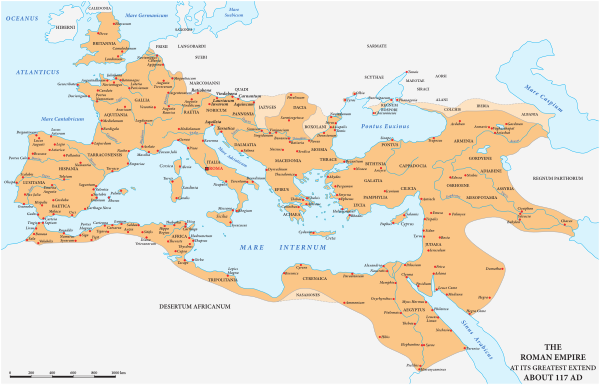
More than a century later, Emperor Trajan marched east towards the Parthians, conquering Armenia and Mesopotamia and pushing Roman power to its greatest territorial extent. But Trajan’s victories revealed the same truth Crassus had discovered in blood: invading the region was one thing, holding it was another.
The deeper Rome pushed into Mesopotamia, the more exposed, costly, and fragile its position became in the face of Parthian resistance.
After Trajan died, his successor Hadrian gave up those eastern gains and pulled Rome back to a more defensible frontier east of the Euphrates, effectively admitting that permanent control of Mesopotamia was not worth the cost.
I'm bringing up these stories because they parallel the war in Iran today.
Today, Rome is no longer the dominant global power. The United States is. And now the US appears to be making the same mistake the Romans made. Instead of hoping Parthian arrows would run out, Washington is hoping Persian ballistic missiles will run out.
History suggests that great powers often deceive themselves into believing that superior force can overcome geography, logistics, and the determination of an entrenched adversary. Crassus learned otherwise. Trajan learned that battlefield success is not the same thing as strategic success. Hadrian understood what statesmen are often the last to admit: sometimes the wisest course is not pressing forward, but recognizing that a position cannot be held at acceptable cost.
While the war with Iran is still unfolding, I believe there is a very real chance the US is about to learn the same painful lesson the Romans did—and the implications could be enormous, for investors and for history alike. I don’t think we’ll have to wait long to find out.
History shows that when great powers overreach, the consequences rarely stay contained. They spread outward—into politics, markets, currencies, and daily life.
I believe this conflict could be part of a much larger turning point, which is why I’ve prepared a special dispatch, The Great Monetary Reset of 2026: Why Most Will Be Caught Off Guard—and How You Can Profit Instead.
In it, I explain why America may be approaching its gravest economic crisis in nearly a century, why most people are unprepared for what could come next, and how a small number of investors may be able to protect themselves and potentially profit from the shift.


